The Leads, Vol. 1. 66 NAMs.
Silver Zephyr
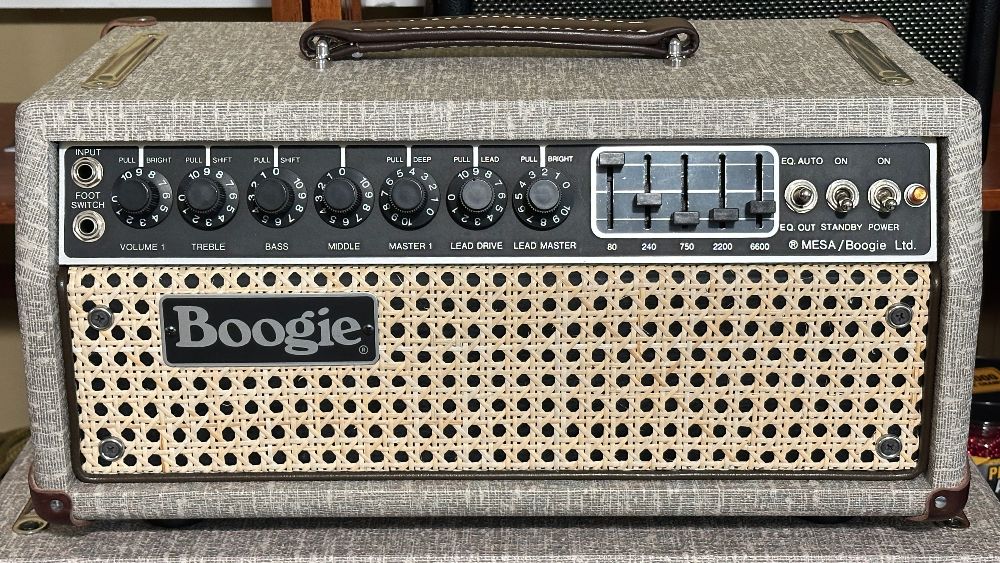
Singing leads and a clear edge, with clean and crunch sounds alongside them. From my 1984 Mark IIC+.
Explore Silver Zephyr
I'm Steven Converse, a guitarist and artist. I make free guitar software, share amp sounds I've shaped, and help other players find their way.
Thousands of players have downloaded these tools and sounds. Their questions and feedback help shape what comes next.
The sounds I use, with the freedom to make them yours.
RigSculpt is the studio rig I built for my own playing, shared freely. It brings together my carefully recorded neural amp models (NAMs), my own Artificer amps and Designer, and a complete collection of cabs and effects. These are the sounds I use, with the listening, testing and small adjustments that go into getting them ready for a session. Open an included preset and play, or follow your ears and make it yours.
That freedom goes beyond turning the usual knobs. Shape an Artificer amp from its controls, or open its circuit and change individual components while you listen. Arrange the rig around it. Go as deep as the sound calls for, with a clear connection between what you're changing and what you hear.
Your existing collection belongs here too. RigSculpt Workshop measures NAMs and IRs by their sound and response, without relying on filenames or the original author's tags. Artificer uses those measurements to help you explore your library from sounds you already like. You can discover possibilities in what you have without interrupting a session to search for more.
I want a guitar rig to feel like an extension of my playing. RigSculpt gives you sounds ready to work with, room to shape them, and a way to keep the choices yours. Both programs are free.
New here? Start with the pictured guideLoad one of the included presets or bring your own NAMs and cabinet IRs. Shape the input, choose your cabs, and add effects around the amp.
Use two amp paths for a stereo rig, then save the sounds you want to return to.
Start with a NAMPlay an Artificer amp as it is, change its parts while you listen, or build your own in the Designer. PLAY, CIRCUIT and APPEARANCE give each kind of work its own place.
The parts list, signal path and chassis offer different ways into the same amp. Go as deep as you want, then get back to playing.
Explore the DesignerChoose cabinets, EQ, drive, modulation, delay and reverb. In CHAIN VIEW, FLEX lets you change their order, split the signal or use an effect more than once.
Presets, snapshots, trails, the looper and MIDI controls help you take those sounds into a performance.
Find your way around the rigThe Workshop measures amp, pedal and full-rig NAMs, cabinet IRs and reverb IRs. Browse by sound, find similar files and reduce the guesswork in a large collection.
It writes its measurements into your files. Artificer can use them to describe your library, pair amps with Synergize and adapt its rig-aware effects.
Meet the Workshop“This is so cool.”
“As someone who's spent years building and curating a large NAM/IR library, I'm genuinely impressed, not only by the sound, but by the philosophy behind the software. It feels like a thoughtfully designed ecosystem rather than just another plugin.”
“There are so many incredibly useful and well thought out features in it... I'm most impressed by the way it can quickly build stereo amp rigs that have balanced tone on each side.”
“I have been using RigSculpt Workshop to analyze my 10,000+ nam files. The program is very well laid out and designed!”
“RigSculpt is AMAZING! I'm still futzing around trying to work things out but I'm blown away by the quality of the tones (including FX).”
“This is exactly the sort of thing I feel like has been missing from this part of the world.”
“Almost zero noise, very clear sound. This is an exciting moment in digital modelers.”
I dial these amps the way I want to hear them, then work on making the NAMs respond like the sounds I played through.
These optional premium packs explore different characters in more depth. They contain amp-only NAMs: choose your own cabinet IR. They work in compatible NAM players, including Artificer.
The Leads, Vol. 1. 66 NAMs.
Singing leads and a clear edge, with clean and crunch sounds alongside them. From my 1984 Mark IIC+.
Explore Silver Zephyr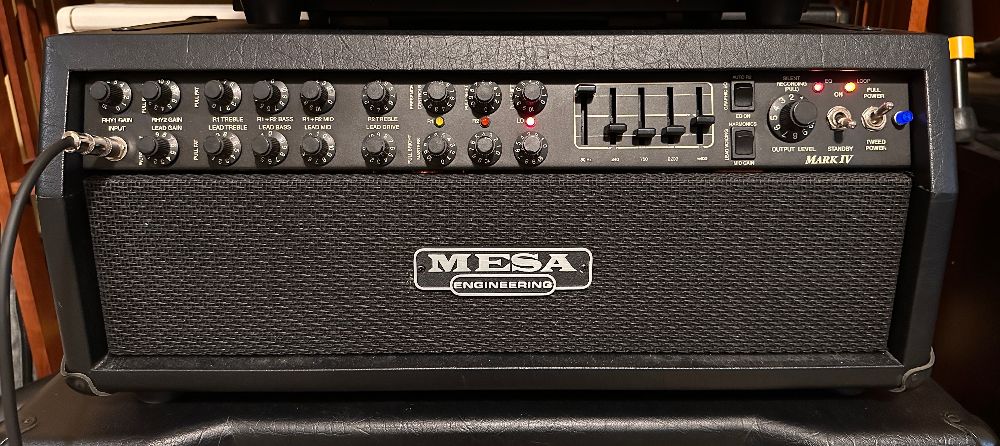
The Chug, Vol. 1. 54 NAMs.
Thick, tight rhythm sounds with the attack for modern high gain. From my 2001 Mark IV Rev B.
Explore Onyx Tempest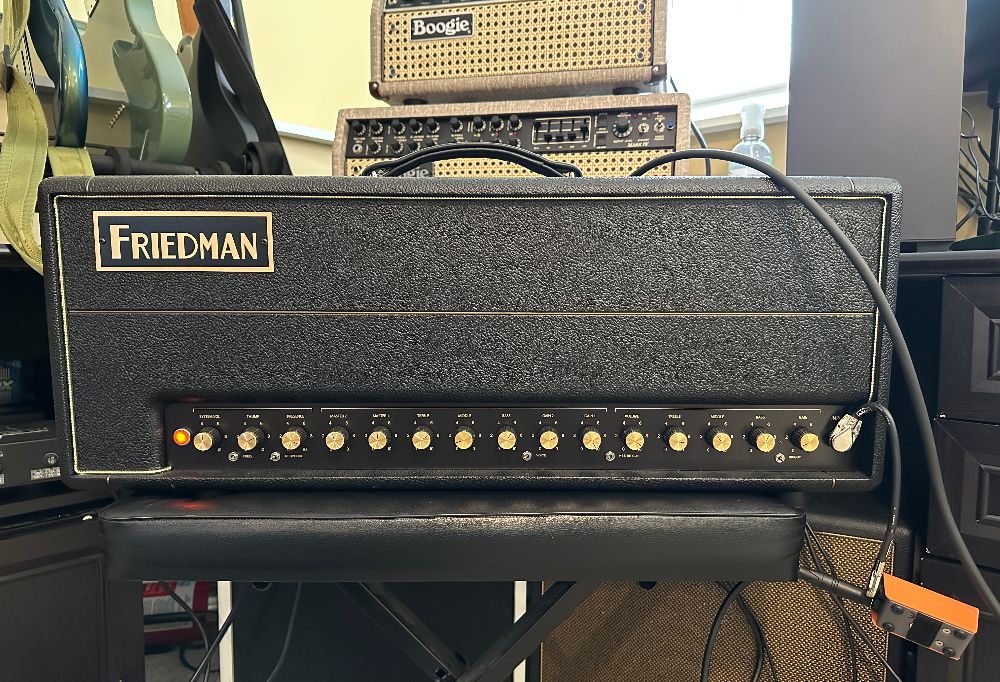
The Roar, Vol. 1. 48 NAMs.
A darker voice with thick mids and saturated leads. From a Friedman BE-100 Deluxe.
Explore Crimson Pyre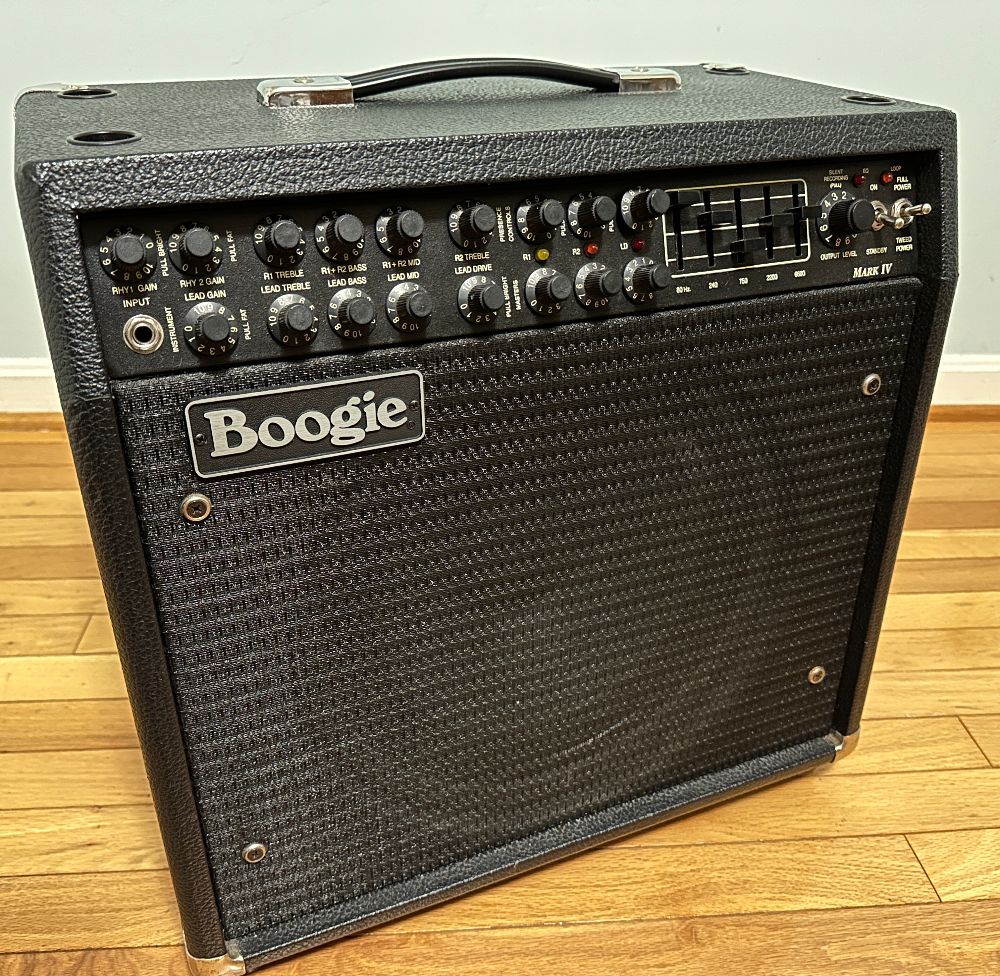
The Sag, Vol. 1. 37 NAMs.
A brighter, looser response that gives under your pick. From my 1990 Mark IV Rev A.
Explore Ashen TempestMaking a NAM can look as simple as connecting an amp and pressing record. But a NAM learns the response of the whole recording chain: the reamp path, the amp at its chosen settings, and the equipment recording its output. A model can match that recording closely while still missing something of the experience of plugging straight into the amp.
Getting those two experiences close has taken me a lot of time, trial and error, repeated listening and measurements, and investment in different gear. Even the speaker load matters. A cabinet shapes the sound you hear, but its speakers also place an electrical load on the amp that changes with frequency. That affects the amp's response before a microphone or cabinet IR enters the picture. Load boxes differ in how they reproduce that behavior. I've measured and heard differences that changed which equipment I use.
For my newer packs, I compare a guitar loop played straight into the amp with the same loop sent through the full recording and reamp path. I adjust the level in small steps and repeat the comparison. This null test is one part of checking that the recording reflects the sound I played through, before asking NAM to learn it. Input calibration and Workshop measurements travel with the finished files.
I'm proud of how close these NAMs get to playing directly through the amps at the recorded settings. Price alone tells you little about the preparation behind a pack. I want that care to be something you can hear and feel when you play.
Players have told me they notice the thought behind both the NAMs and RigSculpt. That matters to me. I make these sounds and tools for my own playing too, so every small detail has a reason to matter.
Silver Zephyr, Onyx Tempest and Crimson Pyre use the null-test process described here. Ashen Tempest predates it and uses carefully matched levels. Each listing explains its method and settings. Your input calibration and chosen cabinet IR also shape the result.
I regularly go live on YouTube to play, answer questions and talk through what I'm working on.
Those conversations help me see beyond my own habits. If you're figuring out a sound, a workflow or something in RigSculpt, come ask.
Visit my YouTube channelThis one-take walkthrough predates 0.92. The interface has changed; use the field guide for the current controls.
I take on a small number of sessions through Ko-fi. Availability rotates around my own music and other responsibilities.
See which sessions are openSend a track or your playing. I'll listen closely and write candid notes for your goals. The lessons that stayed with me, including those with Nick Johnston, were personal and artist-first. That's the spirit I bring here.
Room to go back and forth and work on what matters to you. I suggest starting with an asynchronous session so we can get to know your playing and decide whether the approach fits.
Work with me remotely to choose sounds on my amps and make NAMs from them. The packs reflect my taste. A session gives us time to work toward yours.
I'm putting together a music community built around mentorship and listening to one another.
I want a place where you can share unfinished work, ask a real question and get a thoughtful response. A place where helping someone else grow is part of being there.
It isn't open yet. For now, the live streams and personal sessions are ways to connect. You're welcome to tell me what you would want from a community like this.
Tell me what would help you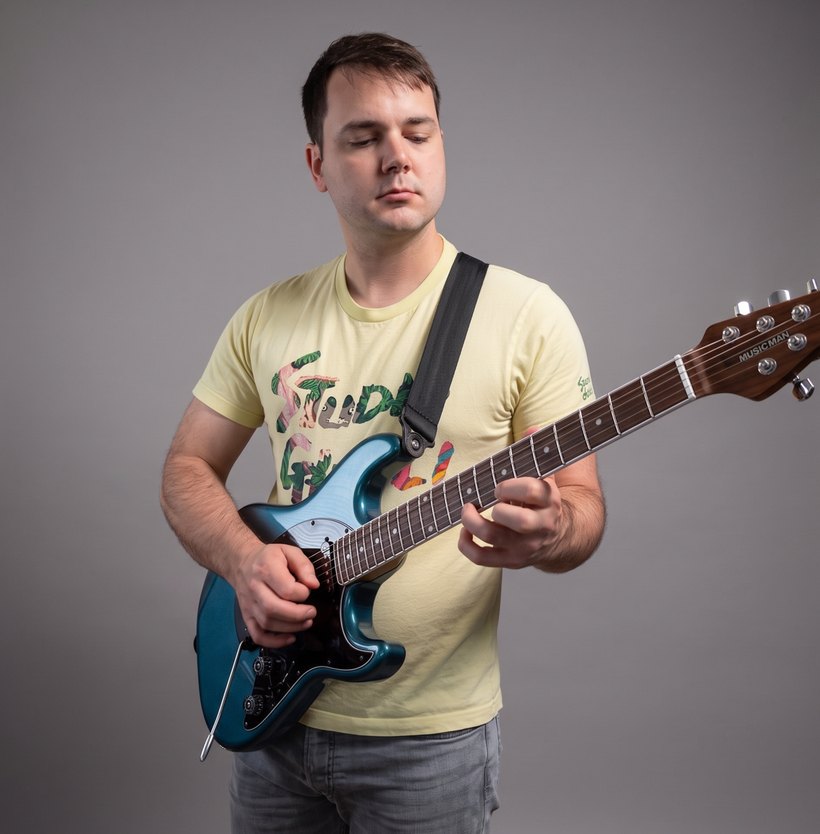
Conversant Soundworks is the part of my musical life that turns outward: things I've learned, built or wished existed, made useful for other people.
RigSculpt began with a library of sounds I cared about and too much time spent searching instead of playing. I wanted to understand what I already had, organize it by sound and make a rig that felt like mine.
It grew because people told me what they needed. Thank you for the questions, the careful feedback and the music you've shared. You've helped turn a personal project into something that serves more than my own playing.
I care about the small decisions: how a control responds, whether a preset makes you want to keep playing, and whether a feature has a reason to be there. I'm still listening, testing and changing things. The player keeps the choices.
I'm a guitarist and artist with a day job and a family. RigSculpt is a passion project. I use AI-assisted development tools to help with demanding software work, alongside the playing, listening, design and repeated testing that shape what it becomes.
The tools make more of the work possible. Deciding what belongs here, how it should feel and whether it helps someone make music takes time and care. I'm also an end user, and I keep coming back to those questions in my own playing.
Steve Atkinson's original Neural Amp Modeler plugin and NAM core, both © Steve Atkinson and available under the MIT license, provided the foundation. Carmelo Di Lio's open NAM-Oversampler work as The Tone Scientist was a starting point for the oversampling. I've substantially adapted and developed that work for RigSculpt. I'm grateful to them and the wider open-source community; their credits and license notices remain in the software.
RigSculpt is freeware, including for use in your commercial music. I keep my own source code private so I can sustain the project, choose its direction and stay focused on the people it is meant to serve. Open-source components retain their own licenses and acknowledgments.
Premium NAM packs and optional support help sustain the work. Neither is required to use the software. If you would like to support the foundation it grew from, please consider supporting Steve Atkinson.
Enigma, featuring Nick Johnston, from my album Palette. Making music is why I care about the tools in the first place.
RigSculpt Artificer is the rig you play through, with NAMs, editable Artificer amps, cabs and effects ready to explore.
Add RigSculpt Workshop to measure and organize your own library. Both programs are free. Start with an included preset and make it yours.
The macOS and Linux standalone apps are available. The Windows standalone is complete but awaits the signed ASIO agreement. Check the package notes before downloading.
Plug-in + Workshop available
Artificer: Windows 10 or 11, 64-bit, in a VST3-compatible DAW. An AVX-capable processor is required; the installer checks compatibility.
Workshop: a separate desktop application, available now for analyzing and organizing your library.
Standalone: complete, but not released yet. I am waiting for the Steinberg ASIO licensing agreement to be signed by both parties before distributing the Windows app.
Plug-ins + both apps available
Artificer: macOS 12 or later, Intel or Apple Silicon. Use the VST3 or AU plug-in in a compatible DAW, or play through the standalone app without a DAW. 0.98 was the last release for macOS 11.
Workshop: an Apple Silicon Mac (M1 or later) on macOS 14 or newer. 8 GB of unified memory is a sensible minimum; 16 GB is recommended for large libraries.
The Mac packages are code-signed and notarized by Apple. Choose the RigSculpt package that includes the standalone if you want both ways to play.
Plug-ins + standalone + Workshop available
Artificer: 64-bit x86 Linux with an AVX-capable processor and glibc 2.31 or newer (Ubuntu 20.04 or later, for example), on X11 or XWayland. Use the VST3 or CLAP plug-in in a compatible DAW, or the standalone app with ALSA, JACK or PulseAudio.
Workshop: a separate desktop application for analyzing and organizing your library, with its own runtime included.
0.99.2 is the first public Linux release. Initial testing has been with one Linux user. On Linux both can use a graphics card through Vulkan: RigSculpt's NAM GPU settings and Workshop's Analysis on the graphics card use it when the system has a Vulkan driver for it and the card has passed a check against the processor; otherwise both run on the processor. Please tell me about any desktop, audio-device or DAW problem you find.
AAX/Pro Tools is not supported. A DAW is optional when you use an available standalone app.
Close Artificer and every DAW process before installing. Keep copies of important presets and projects, and read the 0.99.2 release notes.
Your saved files and presets remain yours. The engine behind the Artificer amps is still being refined, so its sound may develop even when a preset keeps its recorded values.
Why it's free. RigSculpt stands on the NAM community's open work, and sharing it is my way of paying that forward. No account is required to use the software. Premium NAM packs and financial support are optional. Hearing the music you make with it means more to me than financial support.